Kite Kitchen
Arriving in Kansas City, Missouri.
United States · North America
Kansas City Burnt Ends
Cubes of brisket point, tender, peppery, and sweet-smoky at the edges.
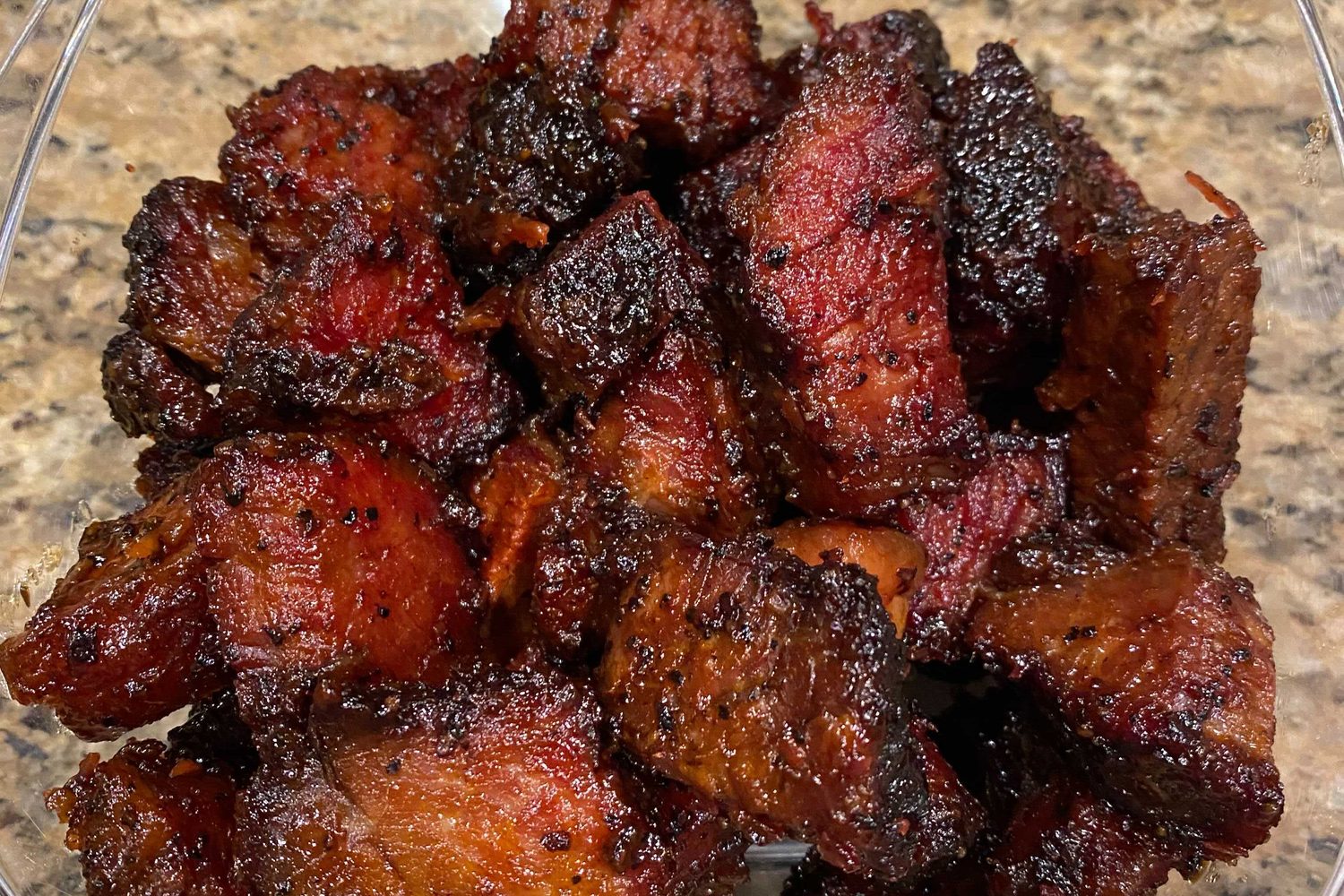

- 40 min prep
- 10 hr cook
- Serves 8
- about 8 servings
8 servings
Origin: United States · 38° N, 90° W
United States · North America · World map
- Low and slow
- Mild
- Gluten-free
- Dairy-free
- Nut-free
History
Kansas City sat on rail lines that moved cattle and cooks, and its barbecue became known for a sweet, smoky plate. Henry Perry, a Black cook from the Memphis area, is the early figure local history credits with selling barbecue in the city in the early twentieth century. Burnt ends are cubes from the fatty point of the brisket, returned to the pit. This page credits Perry as that early local figure without claiming he invented every later sauce.
Cultural background
Point-muscle cubes finished sweet and smoky. They are a Kansas City plate, not a plain Central Texas slice, though both start with brisket.
Why it tastes this way
The point is fattier than the flat, so cubes stay moist while the edges caramelize. A sweet glaze meets pepper and smoke because the city sauce tradition runs sweeter than Texas salt and pepper. The second cook is what makes an end, not a single slice of brisket.
How it is made
Smoke a brisket point, cube it, glaze it, and return it to the pit until the edges are sticky.
How it is used
In a pile, with bread and pickles. They are also eaten on a sandwich.
Ingredients
- 1 brisket point, about 5 pounds
- 2 tablespoons kosher salt
- 2 tablespoons coarse black pepper
- 1 cup ketchup
- 1/4 cup molasses
- 2 tablespoons brown sugar
- 2 tablespoons apple cider vinegar
- 1 teaspoon paprika
- Oak or hickory for the fire
Steps
- Salt and pepper the point. Smoke it indirectly at about 250°F (120°C) until it is about 190°F (88°C) inside and the bark is set.
- Stir ketchup, molasses, brown sugar, vinegar, and paprika into a glaze. This glaze uses molasses, not honey, and it leaves out Worcestershire so the plate stays free of that fish and wheat ingredient.
- Cube the point, toss with glaze, and return the cubes to the pit until they are sticky and the center of a cube is about 195–205°F (90–96°C). Whole beef is safe at 145°F (63°C) with a rest; burnt ends are cooked hotter for tenderness.
- Rest a few minutes and serve.
Whole beef is safe at 145°F (63°C) with a 3-minute rest. For brisket that slices instead of bouncing, keep cooking until the thickest part of the flat is about 195–205°F (90–96°C) and a probe slides in with little resistance, then rest it.
Refrigerate leftovers within 2 hours and use within 3 to 4 days, or freeze. Reheat leftovers to 165°F (74°C). This is a home recipe, not professional food-safety advice.
Variations
- A whole brisket can be sliced for the flat while the point is cubed for ends.
Pairings
- white bread
- pickles
- sweet sauce