
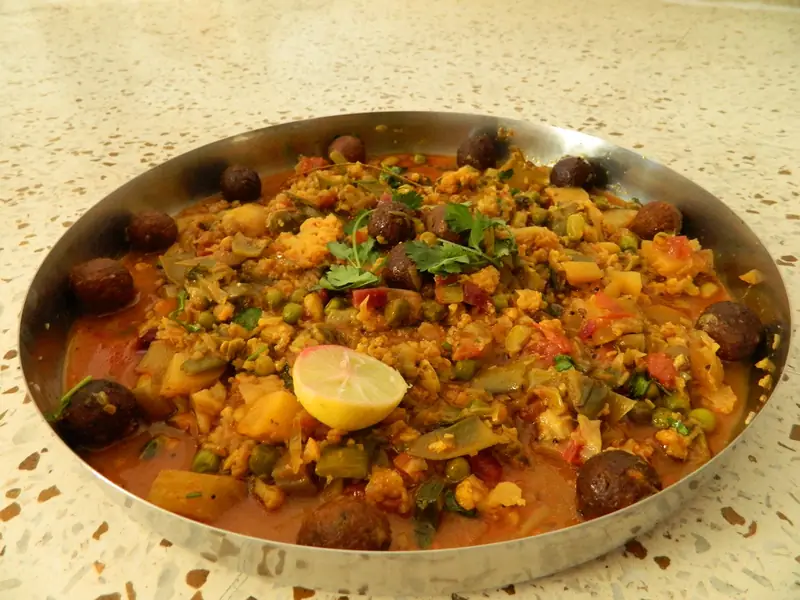
Home adaptation
Stovetop undhiyu
A stovetop home undhiyu for Uttarayan: winter vegetables, a coconut-herb paste, and fried fenugreek dumplings. The buried-pot method is described, not reproduced.
Tradition: Gujarat’s Uttarayan
This is a home adaptation. The tradition page cites the sources. The quantities are this kitchen’s, not a single official formula.
Ingredients
- For the muthiya: 80 g gram flour, 2 tablespoons chopped fenugreek leaves or cilantro, 1/4 teaspoon turmeric, 1/4 teaspoon chili powder, a pinch of salt, 1 teaspoon oil, and a spoon of water
- 200 g green beans, cut in short lengths
- 1 small sweet potato, peeled and cubed
- 1 potato, cubed
- 1 small eggplant, cubed
- 1/2 cup green peas
- 2 tablespoons oil
- 1/2 teaspoon ajwain seeds
- A pinch of asafoetida if you use it
- Paste: 40 g grated coconut, a handful of cilantro, 2 garlic cloves, a small piece of ginger, 1 green chili, 1 teaspoon sesame seeds, 1/4 teaspoon turmeric, 1 teaspoon lemon juice, a pinch of sugar, salt
Steps
- Mix the muthiya ingredients into a stiff dough. Roll small dumplings and fry them in a spoon of oil until speckled brown. Set them aside.
- Blend or pound the paste ingredients with a splash of water until coarse.
- Warm the oil in a wide pot. Add the ajwain and asafoetida, then the beans, potatoes, sweet potato, and eggplant. Stir for a few minutes.
- Add the paste, peas, and about 120 ml water. Cover and cook over low heat until the vegetables are tender, 25 to 30 minutes, stirring once or twice so the bottom does not catch.
- Tuck in the muthiya, cover for 5 minutes, and scatter with more cilantro.
The name undhiyu is tied to cooking upside down: Mint describes a sealed earthen pot set over a pit of coals. This recipe is a stovetop adaptation for a home kitchen. It will not taste like a pit-cooked Surti undhiyu.
Serve with puri if you are cooking the festival plate the Times of India describes. Jalebi is the sweet those reports name beside it. This page does not include a jalebi recipe.