Guatemala · 1 November
Giant kites in Sumpango and Santiago Sacatepéquez
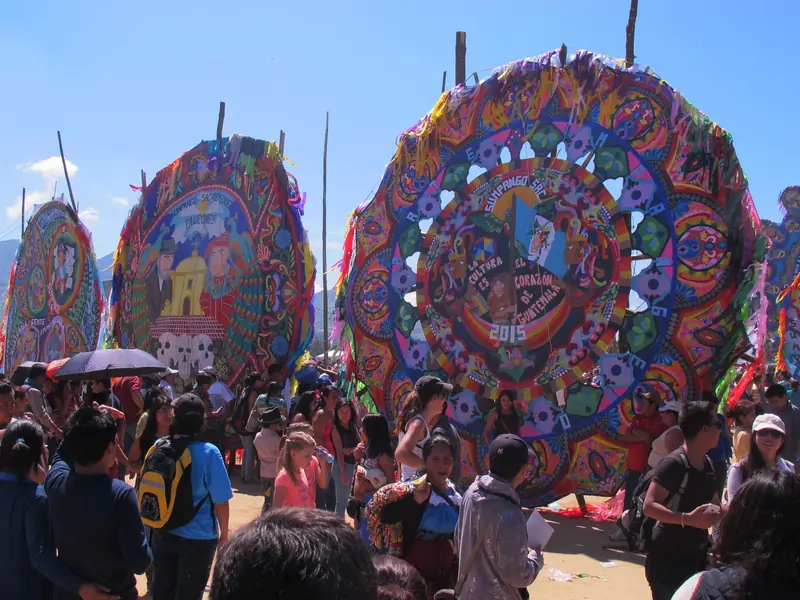
On the Day of the Saints, 1 November, communities in Santiago Sacatepéquez and Sumpango build and exhibit giant tissue-paper kites. Fiambre, a cold mixed salad, is the dish Guatemalan sources tie to that same day.
The kites
UNESCO inscribed the technique of making the giant kites of Santiago Sacatepéquez and Sumpango on the Representative List of the Intangible Cultural Heritage of Humanity in 2024. UNESCO dates the tradition of making and flying them to the late nineteenth and early twentieth centuries, and says they are exhibited during the fairs of the Day of the Saints and the Dead in order to communicate with the ancestors. The kites are made over months: design, canvas, colored tissue, lining, then frame, fringe, and tail.
INGUAT, Guatemala’s tourism institute, describes the Sumpango kites as hand-built circular barriletes that can measure up to about 20 metres across. Some are flown and some are displayed. This page does not pick one legend about their origin beyond what UNESCO and INGUAT publish.
Fiambre
INGUAT calls fiambre the dish of All Saints’ Day in Guatemala: a cold salad of cold cuts, meats, vegetables, and cheeses, with festival sweets such as buñuelos sold alongside it in Sumpango. Families visit graves and share the salad. Fiambre is a 1 November dish across Guatemala, not a food invented for the kite frame. The kite fairs and the salad fall on the same day, which is why they belong on one page.
Recipes differ by family. Red and white versions are often distinguished by whether beets go in. The recipe here is a shortened home salad, not a fifty-ingredient family platter.
Recipes on this site
A shortened fiambre
Home adaptation. A small cold salad in the spirit of Guatemalan fiambre for 1 November. A family fiambre uses many more ingredients.