
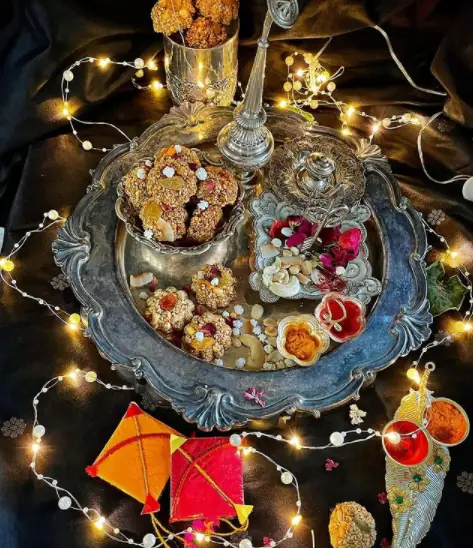
Maharashtra · 14 January
Maharashtra’s Makar Sankranti
Maharashtra Tourism describes Makar Sankranti, on 14 January, as a harvest festival of sesame-and-jaggery sweets and kite flying. The sentence people say while sharing the sweet is the part the sources repeat.
Tilgul and the greeting
Maharashtra Tourism says people exchange sesame and jaggery, tilgul, and quotes the line “Tilgul ghya ani god god bola,” have sesame-jaggery sweets and speak sweetly. It lists tilgul laddoos, gul poli (a jaggery-filled flatbread), and other sesame sweets. The BBC’s travel piece on tilgul gives the same greeting, “tilgul ghya, goad-goad bola,” and describes the sweet as jaggery, sesame, and ghee, shared at Makar Sankranti.
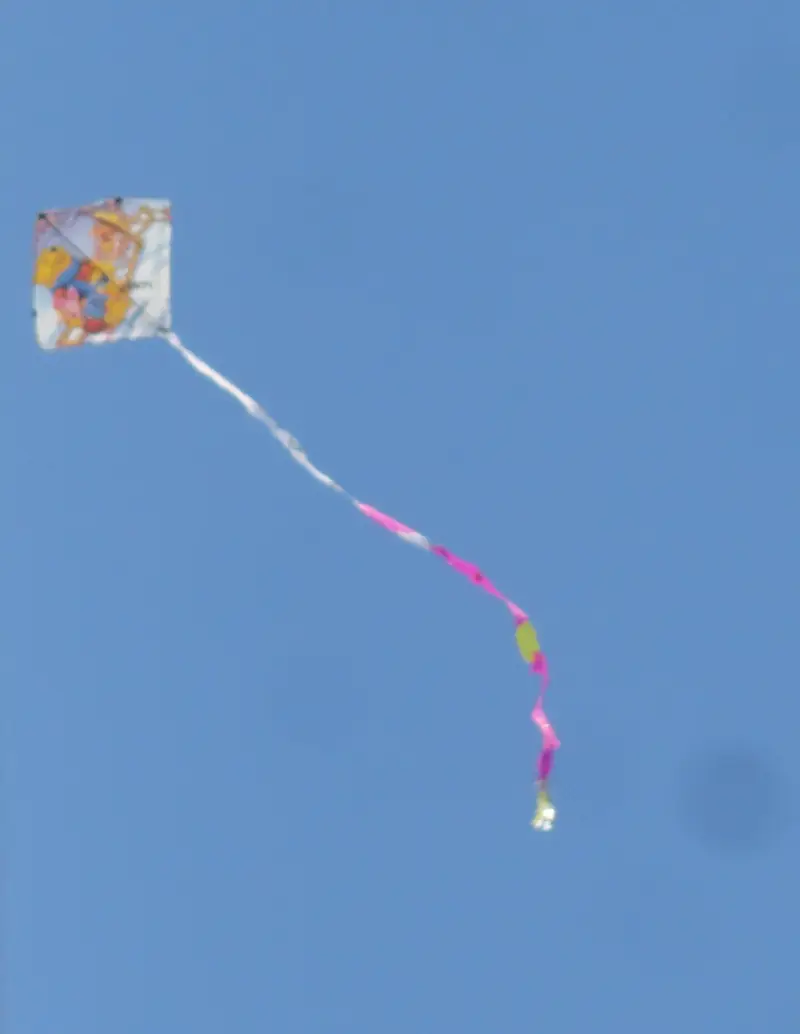
The kite photograph further down this page is titled by its photographer as kites on a Sankranti day. It does not name a city. Maharashtra Tourism is the source for kite flying in Maharashtra. The photograph is not labeled as Mumbai or Pune.
What this page does not claim
Tilgul is a Sankranti sweet across more than one state. Gujarat also eats sesame or peanut chikki at Uttarayan. The greeting about speaking sweetly is the Maharashtrian part these sources single out. This page does not invent a participation count or a ranking of festivals.

Recipes on this site
Tilgul laddoos
Home adaptation. Sesame and jaggery laddoos for Makar Sankranti, the sweet Maharashtra Tourism and the BBC describe people exchanging.