Home adaptation
Qingtuan, with a note on the green
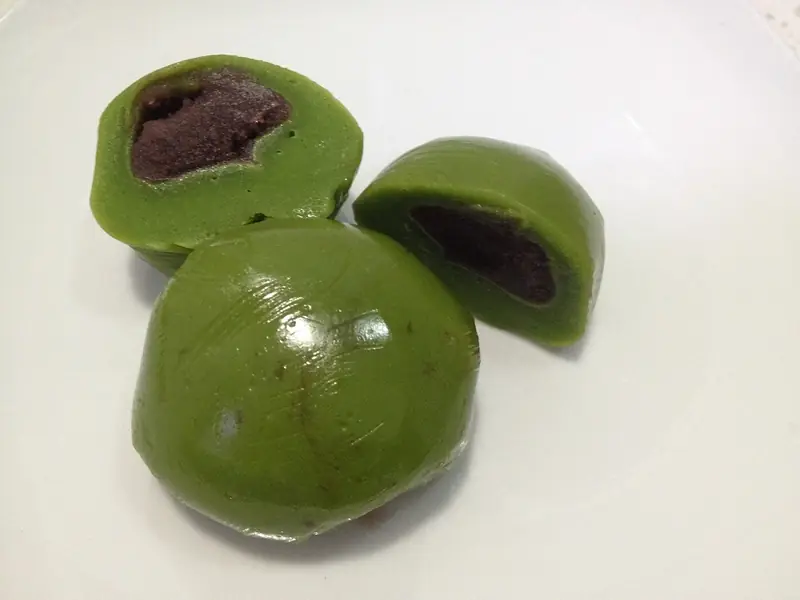
Green glutinous rice balls for Qingming. Mugwort or barley grass is the traditional color. Spinach juice is named here only as a stand-in.
Tradition: Qingming kites and qingtuan
This is a home adaptation. The tradition page cites the sources. The quantities are this kitchen’s, not a single official formula.
Ingredients
- 150 g glutinous rice flour, plus a little for dusting
- 80 ml juice from blanched mugwort or barley grass, or, if you cannot get them, from blanched spinach
- 8 teaspoons sweet red bean paste
Steps
- Blanch a handful of mugwort or barley grass, or spinach if that is the stand-in. Blend with a little water and strain 80 ml of green juice.
- Stir the juice into the flour until a soft dough forms. Add a spoon of water or a spoon of flour if it is dry or sticky. Rest 10 minutes.
- Divide into eight. Flatten each piece, put a teaspoon of bean paste in the center, and seal it into a smooth ball. Dust very lightly.
- Steam over boiling water for 12 to 15 minutes. The skins turn glossy. Cool a few minutes. They are chewy.
Shanghai’s own description of qingtuan uses mugwort or barley-grass juice. Spinach juice colors the dough and does not taste like mugwort. If you use spinach, say so at the table. It is a stand-in, not the festival herb.
The Smithsonian and the Shanghai government are the sources for tying qingtuan and kite flying to Qingming. This recipe is a home batch of the rice ball, not a Shanghai bakery formula.