China · early April
Qingming kites and qingtuan
Qingming, the Pure Brightness festival around 4 or 5 April, is a day for tending graves and then going outside. Smithsonian and the Shanghai government both name kite flying among the outings, and qingtuan as a food of the season in the lower Yangtze.
What the sources say
The Smithsonian’s National Museum of Asian Art describes Qingming as a festival of sweeping and decorating graves, with offerings, and says that afterward people may picnic and fly kites. It names qingtuan, green dumplings of glutinous rice and Chinese mugwort or barley grass, as a popular dish for the time of year.
The Shanghai municipal government’s English pages call kite flying a typical Qingming activity, and say that in Shanghai eating qingtuan around Qingming is a long-standing custom. They describe the dough as glutinous rice colored with mugwort or barley-grass juice, filled with sweet red bean paste, sesame, or other fillings.
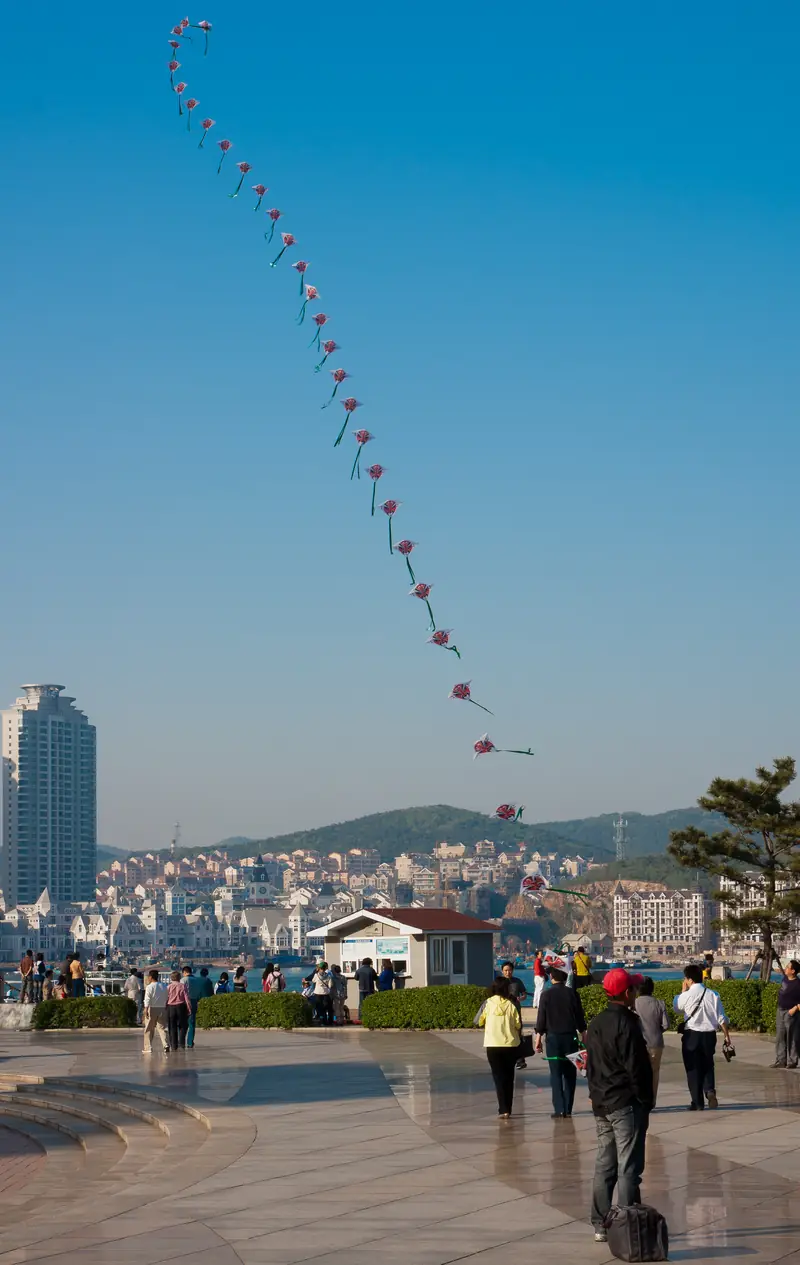
Qingtuan are especially a Jiangnan food, including Shanghai, not a claim that every region of China eats the same thing on Qingming. The Dalian photograph is kite flying in northeast China. It is here because it shows the activity, and the caption says where it was taken.
Recipes on this site
Qingtuan, with a note on the green
Home adaptation. Green glutinous rice balls for Qingming. Mugwort or barley grass is the traditional color. Spinach juice is named here only as a stand-in.